
Maxine to add / edit intro…
Welcome to Nervous System Notes; Norwich Yoga Festival Part One.
As promised here is Part One of what I shared at my talk:
‘What I Wish Everyone Knew about their Nervous System’
We began with why the notion of ‘Self Sabotage’ is not real. When we label our behaviour SELF sabotage we are layering on shame and judgement to what is a reflexive, intelligent, protective nervous system response.
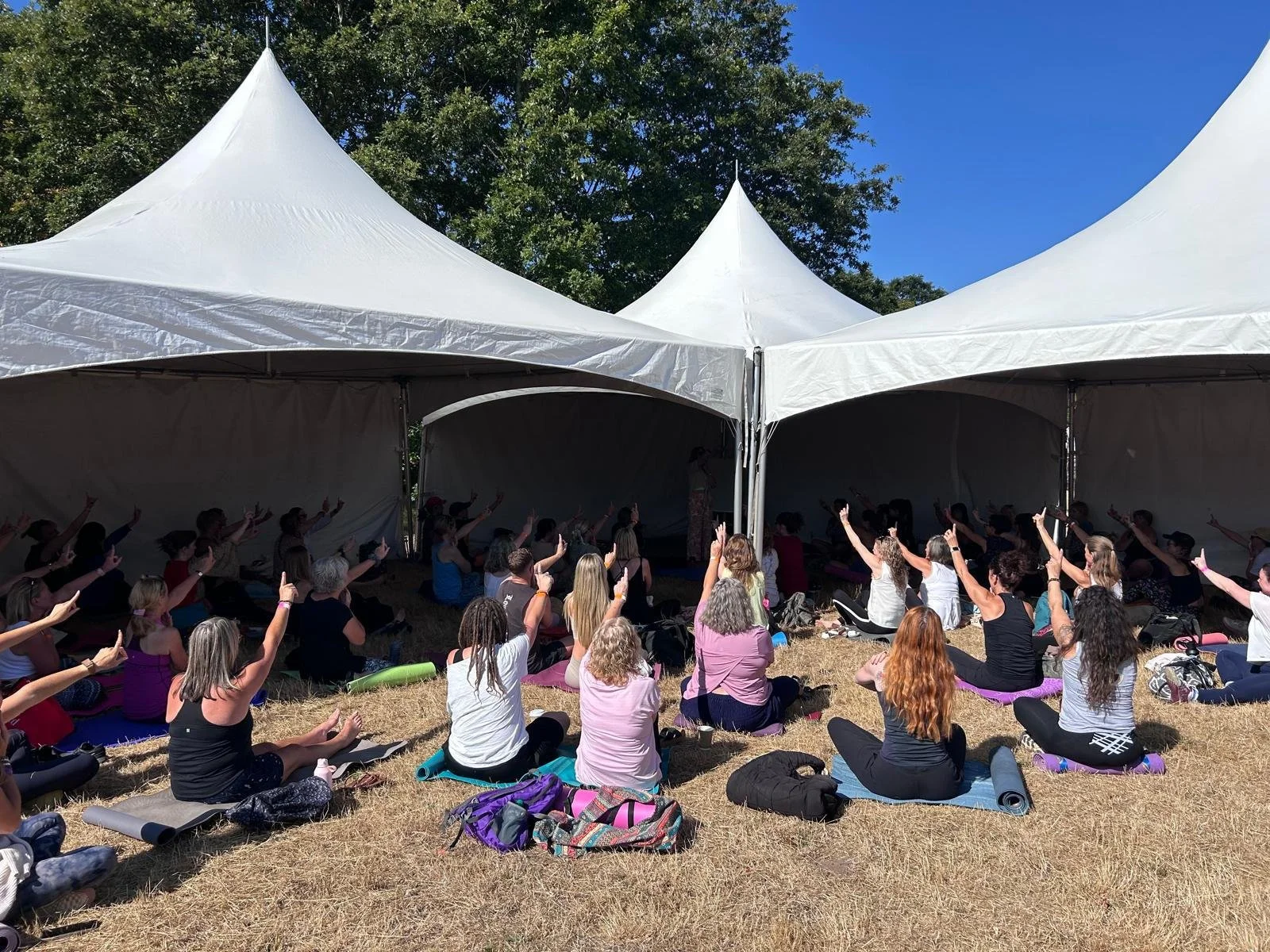
Norwich Yoga Festival 2026
Here's the question I posed to the audience (pictured above):
Is your Comfort Zone ‘comfortable’ or is it just familiar?
Because for so many people, their comfort zone is actually deeply uncomfortable but it is familiar to their nervous system and that familiarity makes it hard to leave our comfort zone - even when our comfort zone is an awful situation!
Knowing the difference between comfortable and Nervous System familiarity helps you to understand your behaviours, your patterns, and why you might stay in a job, relationship, friendship, situation, or anything else much longer than you truly want to.
Understanding why familiar is so attractive to our nervous system helps you understand why you have so much resistance to change, even when you perceive that change as exactly what you want! Why is even that ‘good’ change still so activating.

Here’s why…
Your nervous system subconsciously will choose FAMILIAR patterns of protection over UNFAMILIAR patterns of connection, every single time.
Nervous system work is building the capacity and the ability to tolerate the discomfort of something new, something unfamiliar, without it overwhelming your nervous system and sending you into a survival state. If unfamiliar is perceived as a threat (and it will be) your most familiar survival state will automatically kick in. Until you build the capacity to be with the activation and communicate safety to your nervous system during that experience.
This rewires your brain and your nervous system.
You are not stuck in a pattern of self sabotage, you don't lack will power, your nervous system is choosing familiar to keep you safe.
The job might really suck, mine did and it took me years to leave. Why? Because in familiar situations, your nervous system knows how to help you survive, it has learnt what adaptations and survival strategies ‘get you through’. It knows how to help you survive, because it has been doing that for however long you've been in the job, relationship, situation, whatever it is that you want to leave or change.
You don't have a self-sabotage problem, you have a nervous system capacity issue and you can learn how to change that.
Building nervous system capacity is how you create change in your life.
Whatever change you desire in your life has to start with creating safety in your nervous system for that change.
So, how do we do that? How do we build our nervous system capacity?
By changing the nervous system inputs - which will be the focus of Part Two of this series of emails, coming your way next week.
My question for you: What change have you been saying on repeat that you want, but somehow, the change has not happened? When you call to mind this desired change, what happens in your body? How does your nervous system respond? Be curious about that.
Maxine to add end and sign off here
